June Power
China Top 10 Microgrid Solutions for Renewable Integration examines how Chinese technologies connect solar, wind, batteries, and flexible loads. These systems matter as renewable generation becomes more variable and distributed.
The International Energy Agency reported that global renewable capacity additions reached about 585 gigawatts in 2024. Renewables represented more than 90% of new power capacity worldwide. China contributed the largest share of this expansion, especially through solar photovoltaic and wind projects. IRENA’s Renewable Capacity Statistics 2025 also recorded China as the leading market for new renewable installations.
The hardware is tangible. A factory roof may carry megawatts of solar panels. A nearby battery container can balance production within seconds. Smart inverters can support voltage stability when cloud cover reduces output. However, equipment alone cannot guarantee reliable operation. Protection settings, forecasting, cybersecurity, and dispatch logic require equal attention.
Dr. Robert H. Lasseter, widely recognized for advancing the microgrid concept, stated, “The microgrid concept assumes the hierarchical control of the system.” His insight remains relevant today. Effective control helps operators Integrate Renewable Energy Efficiently into Microgrids while maintaining resilience and power quality.
This ranking considers practical deployment experience, system integration, energy storage, digital controls, and documented performance. It also recognizes a difficult truth: no solution fits every province, factory, island, or campus. A coastal industrial park may need wind forecasting and salt-resistant equipment. An inland data center may prioritize batteries and uninterrupted power.
The selected companies show China’s growing technical depth. Yet their claims still require careful verification through operating records, standards compliance, and independent testing. Industry reports provide direction, not perfect certainty.
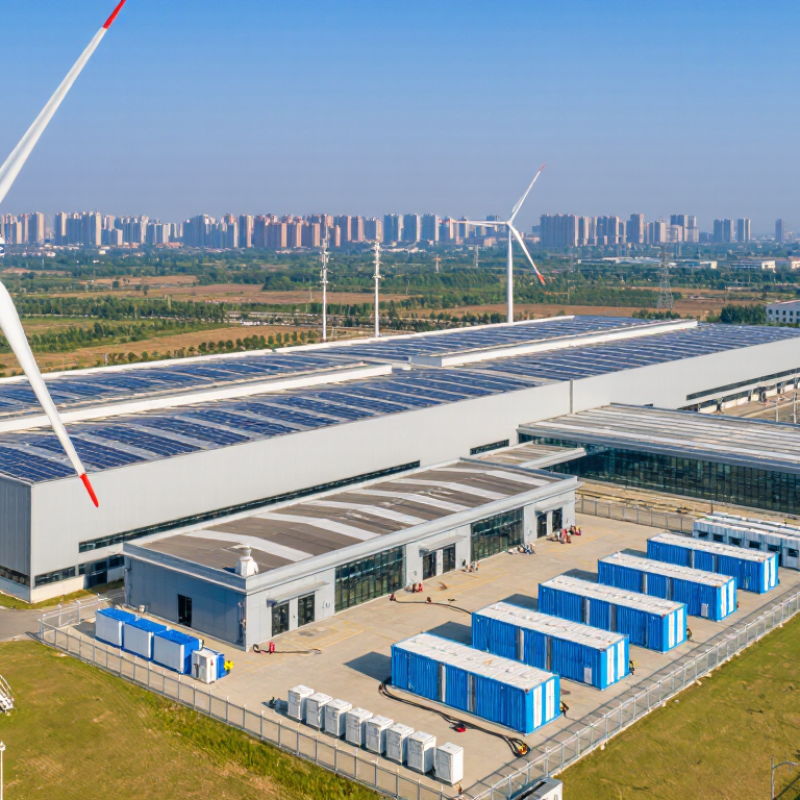
Microgrid Solutions for Renewable Integration
A microgrid is a local electricity system with defined boundaries. It combines loads, solar generation, storage, and control equipment. The U.S. Department of Energy describes it as a controllable entity that can operate with, or independently from, the main grid. This islanding capability matters during storms, feeder faults, or sudden power shortages. In practice, a factory microgrid may coordinate rooftop solar, a battery cabinet, smart inverters, and backup generation within seconds. The system does not merely produce clean power. It balances voltage, frequency, demand, and resilience.
Its role is becoming more important as renewable capacity expands. IRENA reported 3,870 GW of global renewable capacity by the end of 2023. China contributed about 298 GW of new renewable capacity that year, according to the same report. Such growth can increase congestion and create sharper production swings, especially at noon or after sunset. Microgrid controls can shift flexible loads, store surplus electricity, and reduce pressure on transmission lines. The IEA’s Electricity 2024 report expects renewables to supply about 95% of global electricity demand growth through 2026. Yet deployment is not effortless. Real sites remain messy. Batteries degrade, forecasts miss clouds, and protection settings may conflict. A technically elegant design can still fail without trained operators, clear islanding procedures, and realistic maintenance budgets. That gap deserves more attention.
Microgrid solutions combine generation, storage, control, and flexible loads to balance variable renewable energy, improve power quality, and maintain reliable operation during grid-connected or islanded conditions.
The integration capability score counts how many core renewable-integration functions each solution can directly support: forecasting and scheduling, energy balancing, flexibility, voltage or frequency support, and islanded operation. It is a functional comparison, not a market-share ranking.
China Top 10 Microgrid Solutions for Renewable Integration
China’s renewable energy expansion is reshaping local power systems. IRENA’s Renewable Capacity Statistics 2024 reported that China added about 297.6 GW of renewable capacity in 2023. This represented nearly 63% of global additions that year. The National Energy Administration also reported renewable capacity above 50% of China’s total installed power capacity. These figures show scale, but not necessarily flexibility.
Microgrids help convert that scale into reliable local supply. Practical solutions include solar-wind coordination, battery storage, energy management systems, demand response, virtual power plants, flexible charging, hydrogen coupling, heat recovery, rural microgrids, and intelligent protection. The IEA’s Renewables 2024 analysis identified China as the largest driver of global renewable growth through 2030. However, rapid deployment can increase curtailment, voltage fluctuations, and short-term balancing pressure. Local operators still need accurate forecasting and fast control.
The details matter.
A coastal industrial park may combine rooftop solar, batteries, and adjustable cooling loads. A remote village may need solar, storage, and backup generation during weak-grid periods. China’s Energy Storage Industry Association has repeatedly highlighted declining battery costs and expanding storage deployment, yet economics remain location-dependent. Some projects still measure success by installed capacity rather than useful operating hours. That is a weakness worth examining. Reliable microgrid development requires transparent performance data, safety management, grid coordination, and skilled local technicians.
China’s leading microgrid solutions rely on coordinated hardware and software, not renewable generation alone. Solar arrays and wind turbines provide variable power, while lithium-based batteries balance sudden changes. Power conversion systems regulate voltage, frequency, and energy flow between sources, loads, and the public grid.
The energy management system acts as the operating brain. It uses weather forecasts, load data, and electricity prices to schedule charging and discharging. In a factory, it may charge batteries during midday solar production and support machinery during evening peaks. Grid-forming inverters can establish stable voltage during islanded operation. Fast protection devices detect faults and disconnect damaged sections within milliseconds. Sensors also monitor battery temperature, cell voltage, and remaining capacity.
Practical projects need more than advanced equipment. Field experience shows that poor communication links can weaken an otherwise capable system. Cybersecurity, redundant controllers, and local fallback commands therefore deserve serious attention. Thermal management is equally important during hot summers and repeated battery cycling. Independent testing should verify efficiency, islanding performance, and protection coordination before commissioning. Some designs still depend too heavily on optimistic forecasts. That is a weakness. Engineers may need larger reserves, simpler control logic, or better demand response from buildings and industrial equipment. Microgrids work best when technical design matches local weather, grid conditions, and daily electricity behavior.
China’s renewable build-out is creating a practical test for microgrid engineering. The National Energy Administration reported over 1.5 billion kilowatts of renewable power capacity by the end of 2023. Renewable sources represented more than half of China’s total installed capacity. The IEA projects China will provide nearly 60% of global renewable capacity additions from 2024 to 2030. This scale increases the need for local balancing, not only larger transmission lines.
Chinese microgrid solutions increasingly combine rooftop solar, wind generation, battery storage, and intelligent energy management systems. Forecasting software can adjust charging when clouds cross a solar field. Power conversion systems support stable voltage during sudden load changes. Industrial parks may use controllable pumps, refrigeration, and electric boilers as flexible demand. Rural systems often need black-start capability and islanded operation during grid interruptions. Small details matter.
The engineering is not perfect. Battery degradation, limited winter sunlight, and weak distribution networks can reduce expected returns. A system sized only for average weather may fail during a long cloudy period. The China Energy Storage Alliance has reported rapid growth in new energy storage deployment, but project quality still depends on safety testing, dispatch rules, and maintenance practices. Field experience shows that clear protection settings and trained operators often matter as much as advanced software. Data from the IEA and China’s energy authorities supports the market direction, yet local load profiles should guide every design.
China added 297.6 GW of renewable capacity in 2023, according to IRENA’s Renewable Capacity Statistics 2024.
This rapid expansion makes microgrid evaluation more demanding. A credible comparison should measure renewable absorption, not only installed capacity. Key indicators include annual renewable utilization, curtailment, peak-load coverage, and islanding response time. For example, a system switching from grid-connected to island mode within seconds protects refrigeration, pumps, and control rooms. Poor forecasting can still weaken results.
Economic value needs equal attention.
Compare lifecycle cost, battery replacement cycles, maintenance hours, and revenue from demand response. IEA’s Renewables 2024 report expects China to provide nearly 60% of global renewable capacity growth through 2030. Therefore, local solar and wind profiles should shape every performance model. A coastal site may face salt corrosion, while an inland site may need stronger thermal management. The same solution cannot receive identical scores everywhere.
Operational resilience also deserves a measurable test.
NREL’s microgrid research emphasizes critical-load service, black start capability, and control coordination. Reviewers should request twelve months of interval data, not polished annual averages. Useful evidence includes outage logs, state-of-charge records, and measured round-trip efficiency. Some evaluations still overvalue software claims. That is a weakness. Real performance can fall during extreme heat, communication loss, or partial equipment failure. Scoring should include these uncomfortable scenarios, even when data remains incomplete.
Renewable capacity expanded rapidly, exceeding half of total installed power capacity. Microgrids balance local supply and demand. They can reduce pressure on larger networks.
Typical systems combine solar panels, wind turbines, batteries, and energy management software. Some also use flexible loads, heat recovery, or hydrogen systems. The mix depends on local conditions.
Forecasting software can adjust battery charging when clouds reduce solar production. Flexible pumps, cooling equipment, and electric boilers can change their operating times. Fast control is essential.
A coastal industrial park may use rooftop solar, batteries, and adjustable cooling loads. Refrigeration systems can reduce consumption during short supply shortages. Small details affect performance.
Rural systems often need solar power, storage, and backup generation. Islanded operation can maintain essential services during grid interruptions. Black-start capability may also be necessary.
Battery degradation, weak distribution networks, and limited winter sunlight can lower performance. A system designed around average weather may fail during prolonged cloudy periods. That assumption needs review.
Installed capacity is only one measure. Operators should track useful operating hours, reliability, response speed, safety events, and maintenance results. Bigger is not always better.
Technicians manage protection settings, battery inspections, repairs, and emergency operation. Advanced software cannot replace practical field knowledge. Human oversight still matters.
Yes, if they support islanded operation and suitable protection controls. Batteries and backup generators can maintain priority loads. The design must clearly define safe reconnection procedures.
Local load patterns, weather conditions, network strength, safety requirements, and dispatch rules should guide the design. National trends show opportunity, but local data decides usefulness. I may be overstating software’s role without reliable field measurements.
China’s microgrid sector is developing rapidly as renewable energy expands across urban, industrial, rural, and remote areas. Microgrid solutions combine solar, wind, energy storage, intelligent controls, backup generation, and flexible loads to improve local energy reliability and reduce dependence on conventional power sources. Their primary role is to Integrate Renewable Energy Efficiently into Microgrids by balancing variable generation, coordinating electricity demand, and supporting stable operation in both grid-connected and islanded modes.
The leading Chinese solutions generally focus on different application needs, including industrial parks, commercial buildings, data facilities, rural communities, ports, transportation hubs, and isolated regions. Core technologies include battery storage, power conversion systems, energy management platforms, forecasting tools, demand response, and secure communication networks. To compare the top ten solutions, users should evaluate renewable utilization, storage performance, energy efficiency, reliability, scalability, cybersecurity, lifecycle cost, environmental benefits, and ease of integration. A well-designed microgrid can deliver cleaner power, greater resilience, and stronger control over long-term energy costs.