June Power June Power

Why Reduce Dependency on Utility Grid Power?

Time:2026-10-13 Author:Isabella
0%

Why Reduce Dependency on Utility Grid Power? This question matters as electricity demand rises, weather events intensify, and local outages interrupt essential services. Reducing dependence does not mean abandoning the grid. It means building more control, flexibility, and resilience around it.

Amory Lovins, cofounder of the Rocky Mountain Institute and a respected energy-efficiency expert, stated, “The best energy strategy is to reduce energy waste.” His observation remains practical. A facility can begin with efficient lighting, insulation, smart controls, and high-efficiency heating systems. These measures lower consumption before new generation equipment is installed. The savings appear in quieter rooms, cooler electrical panels, and smaller monthly bills.

Then, distributed resources can support critical loads. Rooftop solar may charge batteries during daylight hours. A properly designed energy-management system can reserve stored power for refrigeration, medical equipment, communications, or emergency lighting. Automatic transfer equipment can help maintain service during a grid interruption. However, batteries have limited duration, solar output changes with weather, and maintenance is often underestimated. Independence is not automatic.

A realistic plan combines efficiency, renewable generation, storage, demand management, and reliable grid connection. It also includes load assessments, safety inspections, permitted installations, and regular testing by qualified professionals. The best design depends on climate, building use, budget, and local regulations. There is no universal package.

Small steps matter. Yet assumptions can fail.

This article explores how organizations and households can Reduce Dependency on Utility Grid Power without sacrificing safety, affordability, or operational continuity. It considers financial payback, resilience benefits, technical limitations, and the decisions required before investing in an onsite energy system.
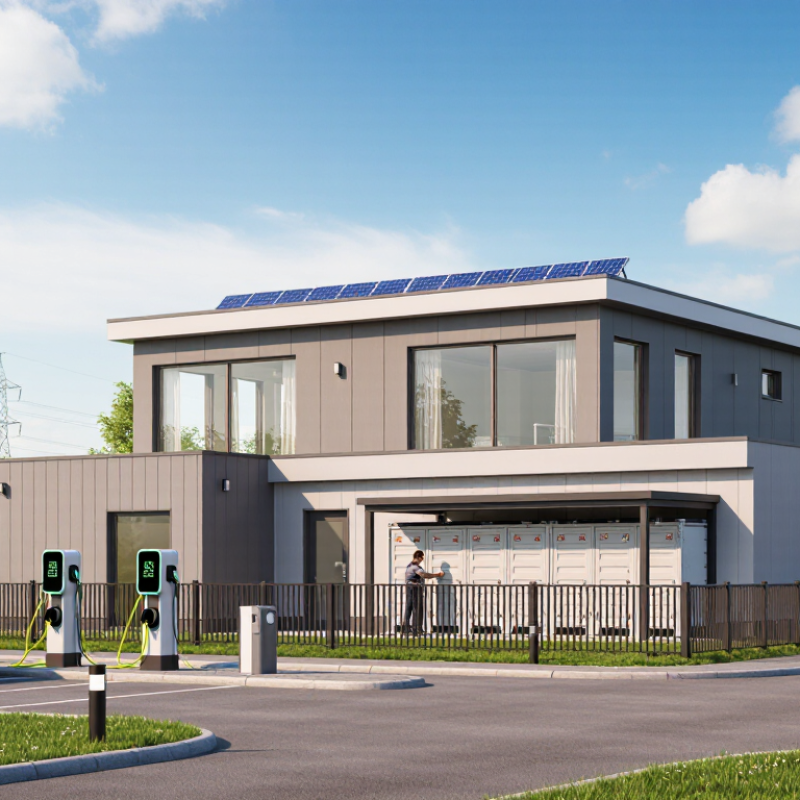
Why Reduce Dependency on Utility Grid Power?

Understanding Dependence on Utility Grid Power

Understanding dependence on utility grid power starts with a simple fact: electricity is rarely optional. Factories, offices, clinics, and data rooms need continuous voltage, not merely annual energy. Yet the grid is a shared system. IEA Electricity 2024 reports that global electricity demand may grow by about 4% annually through 2026. The same report estimates that data centers consumed about 460 TWh in 2022 and may exceed 1,000 TWh by 2026. That pressure can make connection delays, peak charges, and local constraints more visible. Grid power is convenient. It is not invulnerable.

Reducing dependence does not mean abandoning the grid. It means designing around its limits. On-site solar, batteries, efficient loads, and backup generation can cover different failure windows. NREL’s Storage Futures Study describes storage as a tool for shifting energy and supporting reliability during demand peaks. NERC’s 2024 Long-Term Reliability Assessment also identifies rising resource adequacy concerns as electrification and extreme weather increase system stress. However, storage sizing is often treated too casually. A battery lasting two hours cannot solve a twelve-hour outage. That is an uncomfortable calculation. Site audits should examine outage history, critical loads, tariff intervals, fuel logistics, and maintenance skills. Small mistakes matter. An oversized system wastes capital; an undersized one leaves people dependent at the worst moment. No design is perfect. Reliable planning requires measured load data, scenario testing, and documented operating procedures—not optimistic assumptions.

Identifying the Risks of Exclusive Grid Reliance

Why Reduce Dependency on Utility Grid Power?
Identifying the Risks of Exclusive Grid Reliance

Exclusive reliance on utility grid power creates operational risks that are easy to underestimate. The grid is essential, but it is not infallible. Severe storms, equipment failures, wildfires, and regional demand spikes can interrupt service without much warning. A damaged substation may affect several neighborhoods at once. Power stops. Even brief outages can halt production, disable security systems, and spoil temperature-sensitive materials.

Exclusive grid dependence also exposes organizations to changing electricity prices. Time-based tariffs can make afternoon consumption unexpectedly expensive. In a warehouse, refrigeration and ventilation may continue running during peak periods. Monthly costs then rise without higher output. Voltage fluctuations create another concern. Sensitive controls may restart, overheat, or lose stored data. Operational assessments often reveal that emergency procedures assume power will return quickly. That assumption can fail during widespread events.

Reducing dependence does not mean abandoning the grid. It may involve onsite generation, battery storage, energy efficiency, or carefully planned load management. Each option requires technical assessment, maintenance planning, and realistic financial analysis. A backup system is not automatically reliable. An undersized battery may last only minutes. Poorly maintained equipment may fail when needed. The uncomfortable question is whether a resilience plan has been tested under real operating conditions, not merely approved on paper.

Why Reduce Dependency on Utility Grid Power? - Identifying the Risks of Exclusive Grid Reliance

Risk Dimension Observed Data or Benchmark What Exclusive Grid Reliance Means Potential Operational Impact Risk-Reduction Measure Reference Year
Weather-Related Outages Approximately 83% of major reported U.S. power outages from 2000–2021 were associated with weather-related events. A single storm, wildfire, flood, heatwave, or ice event can interrupt the primary electricity supply. Shutdown of production, loss of environmental controls, building access restrictions, and delayed order fulfillment. Combine grid supply with on-site generation, battery storage, load prioritization, and tested emergency procedures. 2000–2021
Interruption Duration The average U.S. electricity customer experienced about 137 minutes of interruption in 2023, excluding major-event days. Even routine faults can create meaningful downtime when no independent supply is available. Restart losses, equipment reset time, spoiled temperature-sensitive materials, and labor downtime. Define critical loads and install automatic transfer capability for essential circuits. 2023
Major-Event Volatility Including major-event days, the average U.S. customer experienced roughly 5.5 hours of interruption in 2023. Rare but severe events can produce outage durations many times longer than normal reliability averages. Extended closure, inability to maintain safety systems, communications disruption, and missed service-level commitments. Size backup systems for the required ride-through period and maintain fuel or recharge arrangements for extended events. 2023
Financial Exposure In a 2024 data-center industry survey, 54% of respondents reported that their most recent outage cost more than USD 100,000. The financial effect of a grid outage may exceed the electricity bill savings achieved by using only utility power. Revenue loss, recovery expense, damaged inventory, contractual penalties, and customer compensation. Compare resilience investment with the value of avoided downtime and establish recovery-cost thresholds. 2024
Power Quality Disturbances Voltage sags, transients, harmonics, and frequency deviations can occur even when a complete outage does not. A continuously energized grid connection does not guarantee clean or stable power for sensitive equipment. Unexpected shutdowns, control-system faults, data corruption, premature equipment aging, and nuisance trips. Use monitoring, surge protection, voltage regulation, uninterruptible power systems, and properly coordinated protection. Ongoing
Peak-Demand Stress Electricity demand commonly reaches seasonal peaks during extreme heat and cold, when generation and transmission systems are under greater stress. The probability of curtailment, voltage problems, or emergency load reduction increases during system-wide peaks. Production interruptions, reduced HVAC performance, higher demand charges, and limits on business expansion. Add demand response, energy storage, efficiency controls, and distributed generation for peak periods. Seasonal
Fuel and Supply-Chain Dependency Grid reliability depends on interconnected generation, transmission, distribution, communications, and fuel-supply infrastructure. A failure in any upstream component can affect customers even when the local facility is operating normally. Regional outages, delayed restoration, limited access to essential services, and reduced operational predictability. Use diversified energy sources, local generation, energy storage, and documented fuel-management plans. Ongoing
Recovery and Restart Risk A short interruption can require a much longer restart because systems may need inspection, sequencing, recalibration, and safety verification. Grid restoration does not automatically return the facility to full operating capacity. Cascading delays, lost work-in-progress, quality failures, and longer-than-expected recovery time. Test black-start and restart procedures, maintain spare parts, and conduct periodic resilience exercises. Ongoing
Data note: Figures reflect publicly reported U.S. reliability and outage benchmarks. Actual exposure varies by location, facility type, utility territory, weather conditions, and the definition of a major event.

Evaluating Economic and Environmental Benefits

Why Reduce Dependency on Utility Grid Power?

Evaluating Economic and Environmental Benefits

Reducing dependence on utility electricity can improve cost control, but savings are not automatic. On-site solar generation avoids some peak-price purchases and can protect operations during short outages. The International Energy Agency reported that global renewable capacity additions reached nearly 510 gigawatts in 2023, showing how quickly cleaner generation is expanding. Yet panels alone cannot guarantee reliable power after sunset.

Energy storage changes the calculation. A battery can charge during low-cost hours and discharge when demand charges rise. It can also keep refrigeration, lighting, or essential equipment running during an outage. The economic result depends on local tariffs, battery prices, maintenance, and replacement schedules. A system sized too aggressively may remain underused. That is an expensive mistake.

Environmental benefits are measurable, though not perfect. The Intergovernmental Panel on Climate Change reports median lifecycle emissions of about 48 grams of CO2-equivalent per kilowatt-hour for solar power, compared with roughly 820 grams for coal. Reducing grid purchases can therefore lower operational emissions, especially where coal and gas dominate generation. However, batteries require minerals, manufacturing energy, and eventual recycling. The U.S. National Renewable Energy Laboratory also emphasizes that lifecycle impacts vary by technology and supply chain. Grid power still matters. A balanced design usually combines efficiency, renewable generation, storage, and limited grid support.

Why Reduce Dependency on Utility Grid Power?

Evaluating Economic and Environmental Benefits

Reducing purchased grid electricity from 1,000 MWh to 600 MWh per year lowers annual utility energy costs from approximately $120,000 to $72,000 and reduces location-based emissions from about 390 to 234 metric tons of CO₂e. This transparent benchmark scenario uses a $0.12/kWh electricity rate and a 0.39 kg CO₂e/kWh grid-emissions factor; actual results vary by location, tariff, load profile, and on-site generation performance.

Using Renewable Energy and Energy Storage Systems

Reducing dependence on utility grid power is not about disconnecting completely. It is about producing more electricity on-site and storing it intelligently. Solar panels can generate power across rooftops, parking areas, and unused land. Battery systems can hold surplus energy for evening demand, outages, or expensive peak periods. According to IRENA’s Renewable Capacity Statistics 2024, renewable sources represented 86% of new global power capacity added in 2023. That growth shows technical confidence, but not unlimited reliability. Weather still changes quickly.

The IEA’s Batteries and Secure Energy Transitions report states that global battery storage additions reached about 42 GW in 2023, more than doubling in one year. This growth supports factories, offices, and community microgrids that need stable power. Energy management software can prioritize essential loads, such as refrigeration, pumps, and medical equipment. However, storage sizing is often underestimated. A battery that lasts four hours may not cover a cloudy, high-demand day. That is an uncomfortable design gap.

Tips: Start with an energy audit, not a product list. Review hourly load data, outage history, and seasonal solar production. Use batteries for peak shaving and backup, but measure round-trip losses. The IEA also notes that storage deployment must expand rapidly to support rising renewable generation. Forecasts can be wrong. Leave room for maintenance, replacement costs, and safer operating margins.

Planning a Gradual Transition to Energy Independence

Why Reduce Dependency on Utility Grid Power?

Planning a gradual transition to energy independence starts with measurement, not expensive equipment. Review twelve months of electricity bills and mark the hours when demand peaks. A home office may consume power during daylight, while heating equipment often runs after sunset. A simple energy audit can reveal wasted consumption, such as an aging refrigerator or poorly sealed windows. Small changes matter. They also reduce the size and cost of future energy systems.

Next, improve efficiency before adding generation. Replace inefficient lighting, adjust thermostats, and inspect insulation around doors and attic spaces. Then consider a modest solar installation, battery storage, or another suitable local resource. Build capacity in stages. One household might begin with essential circuits, including refrigeration, lighting, communications, and medical equipment. Another may need larger storage because outages are frequent. A licensed professional should assess wiring, structural limits, permits, and fire safety requirements.

The transition should remain flexible. Energy demand changes with weather, family routines, and new appliances. Track monthly production and consumption with reliable monitoring tools. Compare results during cloudy weeks, not only favorable seasons. I once underestimated winter heating demand, and the battery reserve disappeared faster than expected. That mistake changed the plan. A larger system was not the only answer; better insulation helped more. Complete independence may be unrealistic for some properties, but reduced grid reliance can still improve resilience, predictability, and control over household energy costs. Check the figures regularly. Revise the plan when evidence disagrees.

FAQS

Why should a property reduce its dependence on utility grid power?

The grid is convenient but not invulnerable. Connection delays, peak charges, equipment failures, and severe weather can disrupt operations. Local generation and storage can reduce these risks.

Does reducing grid dependence mean leaving the grid completely?

No. A balanced system can combine grid power, solar generation, batteries, and efficient equipment. Complete independence may be unrealistic for some properties. Lower dependence can still improve control and resilience.

How can a battery support essential operations?

A battery can charge during lower-cost hours and discharge during expensive periods. It can support refrigeration, lighting, communications, and medical equipment. A two-hour battery cannot cover a twelve-hour outage. That uncomfortable calculation matters.

How should someone decide the right battery size?

Review outage history, critical loads, tariff periods, and measured electricity use. Test short, medium, and extended outage scenarios. An oversized battery wastes capital. An undersized battery fails when needed most.

What should a household check before installing solar panels?

Review twelve months of electricity bills and identify peak-use hours. Check roof condition, shading, wiring capacity, structural limits, permits, and fire safety. Panels produce less during cloudy periods and cannot generate power after sunset. Plan around those limits.

Can energy efficiency reduce the cost of a future energy system?

Yes. Efficient lighting, better insulation, and adjusted thermostats reduce total demand. Inspect aging refrigerators, drafty doors, and poorly sealed attic spaces. Small changes matter. Lower demand may require fewer panels and smaller batteries.

What are the financial benefits of using local renewable energy?

Local generation can reduce peak-price purchases and provide limited outage protection. Actual savings depend on tariffs, equipment costs, maintenance, and replacement schedules. A system used rarely may not justify its price. That estimate was wrong.

What environmental benefits can reduced grid use provide?

Renewable electricity generally creates fewer lifecycle emissions than coal-based generation. Lower grid purchases can reduce operational emissions where fossil fuels dominate. Batteries still require minerals, manufacturing energy, and responsible recycling. The benefits are real, but not perfect.

How can someone manage a gradual transition?

Start with measurement, not expensive equipment. Track monthly production, consumption, cloudy-week performance, and battery reserves. Begin with essential circuits, then expand when evidence supports it. Revise the plan when actual results disagree.

Conclusion

Reducing reliance on utility grid power can improve energy security, financial stability, and long-term resilience. Understanding dependence on the grid begins with recognizing how homes and businesses are affected by outages, rising electricity prices, supply limitations, and changing energy policies. Exclusive grid reliance may also increase exposure to environmental concerns when electricity is generated from fossil fuels. By choosing to Reduce Dependency on Utility Grid Power, energy users can gain greater control over consumption and reduce vulnerability to unexpected disruptions.

A practical transition can combine renewable energy sources with energy storage systems. Solar or other clean technologies can generate electricity locally, while batteries can store surplus power for use during peak demand or outages. These solutions may lower operating costs, reduce emissions, and support more efficient energy management. Energy independence does not require an immediate, complete separation from the grid. Instead, users can begin with efficiency improvements, assess their energy needs, install suitable renewable systems, and expand storage gradually according to their budget and goals.

Isabella

Isabella

Isabella is a dedicated marketing professional with a sharp focus on driving brand growth and engagement through strategic content creation. With an extensive background in digital marketing, she combines her passion for storytelling with her keen understanding of industry trends to deliver......