 June Power
June Power
June Power
High-efficiency, scalable energy storage architectures configured for high thermal resilience and rapid discharge/recharge requirements.
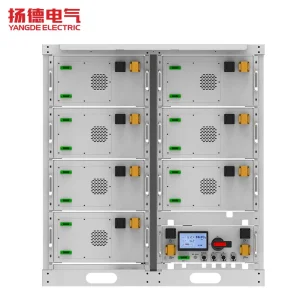
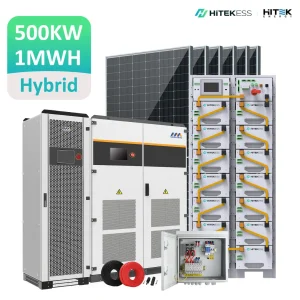
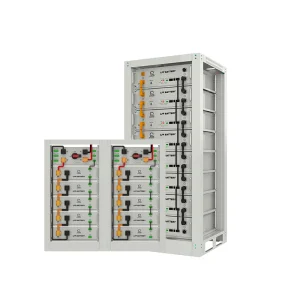
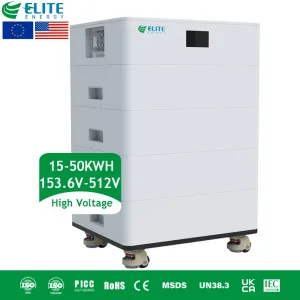
Kaédi, positioned as a critical administrative and commercial capital of Mauritania's Gorgol region, operates at the forefront of Sahelian agricultural and trade developments. With a climate characterized by intense solar radiation and seasonal challenges along the Senegal River valley, the city's power grid is historically dependent on centralized grid links and local diesel-based backup generation. The primary commercial and agricultural sectors—specifically local rice milling, livestock trade, food cold-storage systems, and municipal water purification facilities—require highly stable electricity grids that the traditional regional infrastructure struggles to supply consistently.
Consequently, the transition to high-voltage solar photovoltaic (PV) hybrid systems with robust battery energy storage systems (BESS) is no longer a luxury but an operational necessity. By implementing 3-phase high-voltage systems (ranging from 400V to 1000V DC and above), local agribusinesses and utility providers can mitigate transmission losses, suppress grid fluctuations, and dramatically lower their dependence on imported fossil fuels.
Operating lithium energy storage in ambient temperatures that frequently exceed 40°C requires top-tier engineering. High-voltage energy storage systems reduce operating currents relative to low-voltage equivalents for the same power throughput, lowering thermal losses (I²R) in cables and inter-cell connections. This directly reduces thermal stress, optimizes air-cooling or liquid-cooling efficiency, and prevents accelerated cell degradation.
For factories and farming cooperatives surrounding Kaédi, high-voltage battery architecture ensures stable startup power for heavy inductive loads—such as water pumps, mills, and cooling compressors—without triggering sudden voltage sags or system trips.
An engineering comparison highlighting conversion efficiency, thermal profiles, safety protocols, and balance-of-system (BOS) cost reductions.
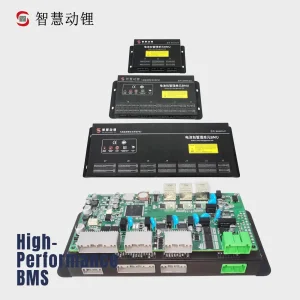
Modern lithium iron phosphate (LiFePO4) chemistries combined with intelligent Battery Management Systems (BMS) constitute the pinnacle of reliable utility architecture. Operating in high voltage ensures that the battery rack voltage matches the DC bus voltage of commercial hybrid inverters, bypassing the need for inefficient step-up DC-DC converters. This direct path dramatically cuts down component failures, simplifying maintenance schedules for rural and regional engineers.
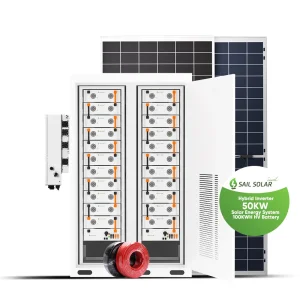
Engineered to support heavy off-grid demands, peak shaving for local utilities, and continuous solar energy shifting.

Empowering local Kaédi rice-milling complexes, factories, and cold chain distribution centers with automated peak shaving, load shifting, and high-voltage backup during regional grid outages.

Supplying municipal grids with rapid frequency regulation, active power smoothing, and grid-forming capabilities. Vital for stabilizing unstable overhead transmission lines across regional Gorgol districts.

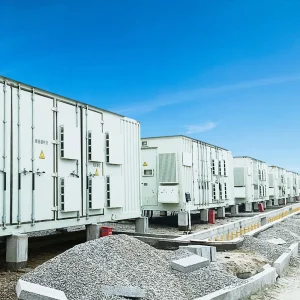
Integrating high-voltage containerized systems to store peak solar yields during midday hours and feed them back to the network during nighttime demand peaks, achieving absolute energy autonomy.
Hunan June Power Technology Co., Ltd. is a national high-tech enterprise located in Jiangbei New Area, Nanjing. June focuses on the R&D, production, and sales of PCS, Hybrid Inverters, Energy Storage Systems (ESS), and Microgrid Systems, while also engaging in the investment, development, and construction of photovoltaic and energy storage power plants.
The company operates an R&D and manufacturing base of over 100,000 m², and its products are distributed in more than 100 countries and regions across Europe, the Americas, Oceania, Africa, the Middle East, and Southeast Asia. To deliver efficient, localized technical support and services, the company has established overseas branches in Los Angeles, Warsaw, Tokyo, and Riyadh, forming a global service network that continuously provides high-quality solutions and services to clients worldwide.
In addition, June has established strategic partnerships with several leading universities, including NUAA, NUIST, and NJUIT. Together, they have set up doctoral research workstations and co-developed talent cultivation platforms dedicated to the transformation of scientific achievements in the new energy sector, providing solid support for continuous innovation and breakthroughs in energy storage technologies and microgrid systems.
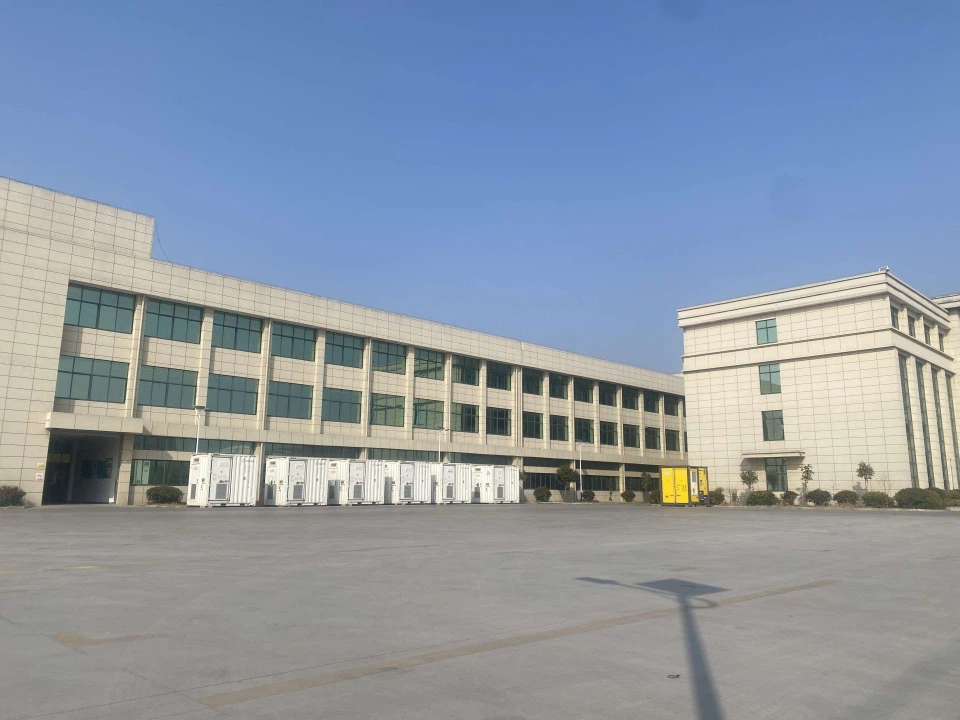


The manufacturing architecture of Hunan June Power Technology Co., Ltd. embodies the core tenets of China's modern Industry 4.0 paradigm. High-voltage energy storage systems demand highly precise manufacturing tolerances. Slight differences in internal resistance between lithium cells can lead to imbalance, causing system capacity restriction or reduced lifespan. At our advanced 100,000 m² production base, we integrate robotic automation and laser welding technologies to secure reliable electric contact, minimizing energy loss across large battery arrays.
Every High-Voltage Energy Storage System undergoes Hardware-in-the-Loop (HIL) testing alongside intensive thermal cycle analysis to guarantee standard operations inside high ambient regions like Kaédi. Our digital control systems trace and map each cell from initial chemical formation to container final testing, logging detailed operational records. This degree of supply chain control allows us to provide reliable products with globally recognized certificates including CE, RoHS, UN38.3, and MSDS.
By establishing physical research stations with leading academic institutions (NUAA, NUIST, and NJUIT), we consistently refine our thermal management, multi-tier protection circuits, and smart BMS algorithms. This research synergy keeps our products optimized for grid support, commercial peak shaving, and hybrid solar-diesel integrations.
Browse our complete list of industrial high-voltage LiFePO4 batteries, modular racks, and smart containerized solutions.
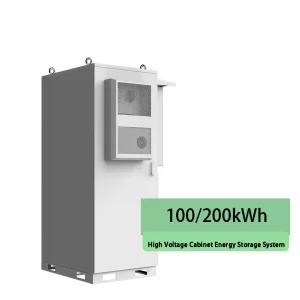
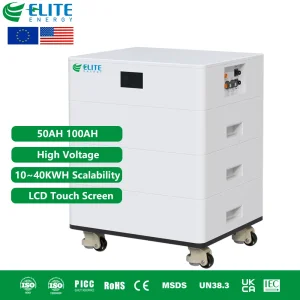
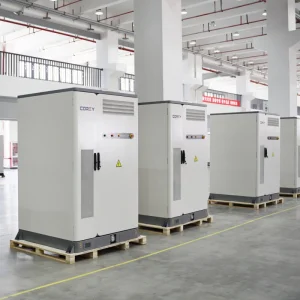
Technical and logistics answers for engineers, plant operators, and procurement officers looking to import to Kaédi.
High-voltage systems (operating above 400V up to 1500V DC) are designed for commercial, industrial, and utility scale projects. By utilizing high voltages, the operating current is reduced, which significantly decreases heat dissipation (I²R loss) in the cabling and cell connectors. In warm regions like Gorgol, Mauritania, minimizing internal system heat is critical for preventing thermal degradation, raising cycle life, and boosting the overall round-trip efficiency (RTE) to over 95%.
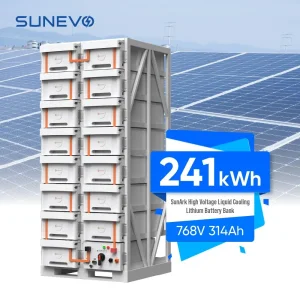
Our storage cabinets and containerized systems feature smart multi-stage thermal cooling. For high-density systems, liquid cooling loops or forced air cooling with automated ventilation are deployed. Coupled with high-grade thermal isolation and intelligent BMS monitoring, the cell parameters are constantly updated, ensuring cell balancing and safety shutdown protocols before any hazardous threshold is reached.
All systems are designed and manufactured in accordance with strict international standards, carrying CE, RoHS, UN38.3, and MSDS certifications. The factory operates under ISO 9001 quality management, ISO 14001 environmental management, and ISO 45001 occupational health and safety standards. Racks are further tested to meet international battery cell safety and transportation standards.
Yes. Combined with appropriate Power Conversion Systems (PCS) and hybrid inverters, our High-Voltage ESS can function in grid-forming mode. This is highly beneficial in Kaédi for off-grid operations, enabling complete independence from the local utility grid. The system can establish a stable 3-phase AC reference voltage, coordinating seamlessly with solar arrays and diesel generators to form robust, self-healing microgrids.
Our premium LFP (Lithium Iron Phosphate) cells typically deliver over 6,000 complete cycles at 80% Depth of Discharge (DoD) under nominal operating temperatures. Even under harsh operational cycles, the advanced thermal management ensures a working lifespan exceeding 10 to 15 years before the battery reaches its end-of-life capacity threshold (typically defined as 80% of original capacity).